
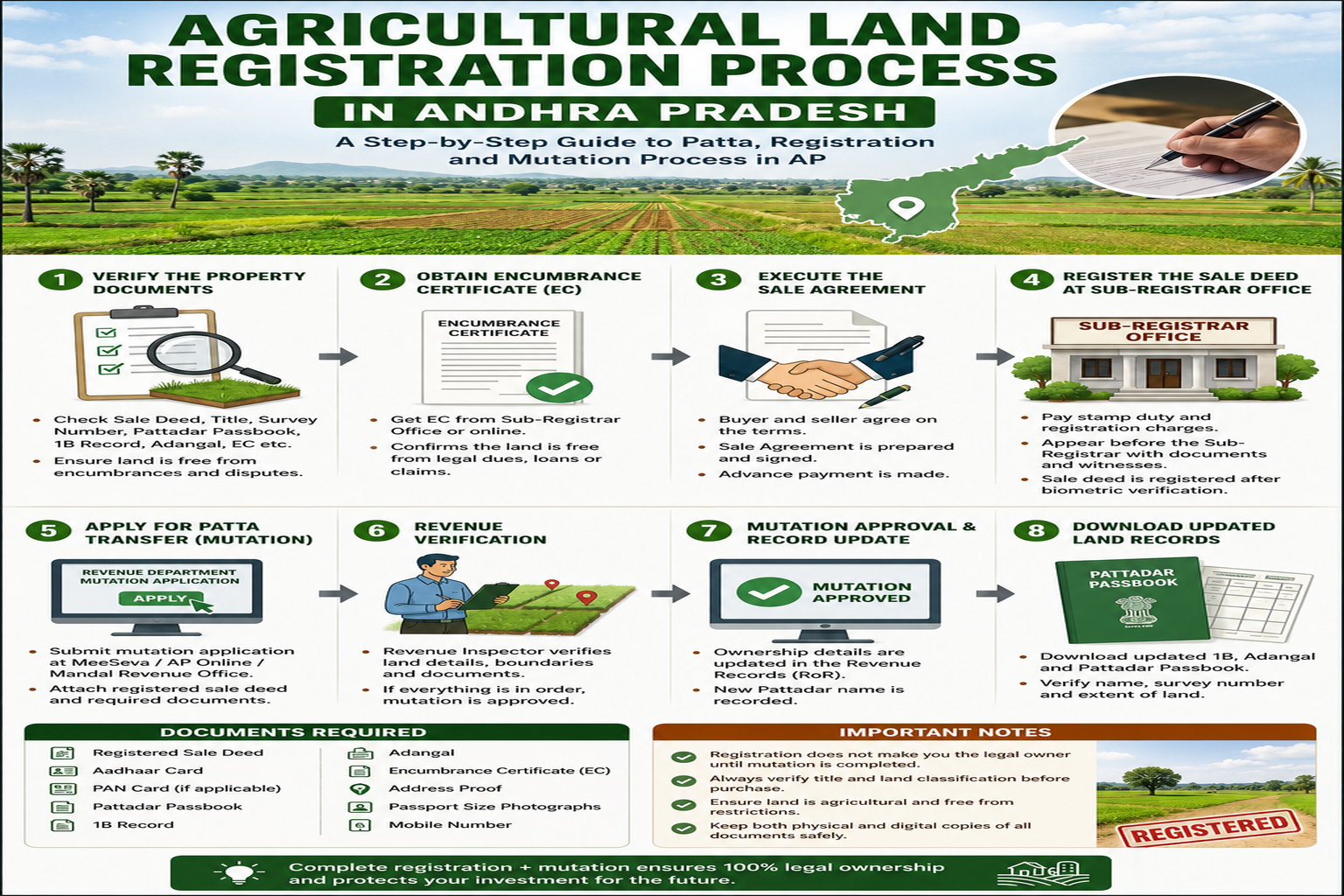
A step-by-step walkthrough of patta, sub-registrar registration, and the mutation process specific to AP.
Learn how to register agricultural land in Andhra Pradesh, from title verification and sale deed registration to patta transfer and mutation.
Buying agricultural land is one of the safest long-term investments, but ensuring the property is legally transferred into your name is just as important as choosing the right land. In Andhra Pradesh, the registration process involves multiple stages, including document verification, registration at the Sub-Registrar Office (SRO), and updating the revenue records through patta mutation. Completing each step helps establish clear ownership and reduces the risk of future disputes.
Step 1: Verify the Property Documents
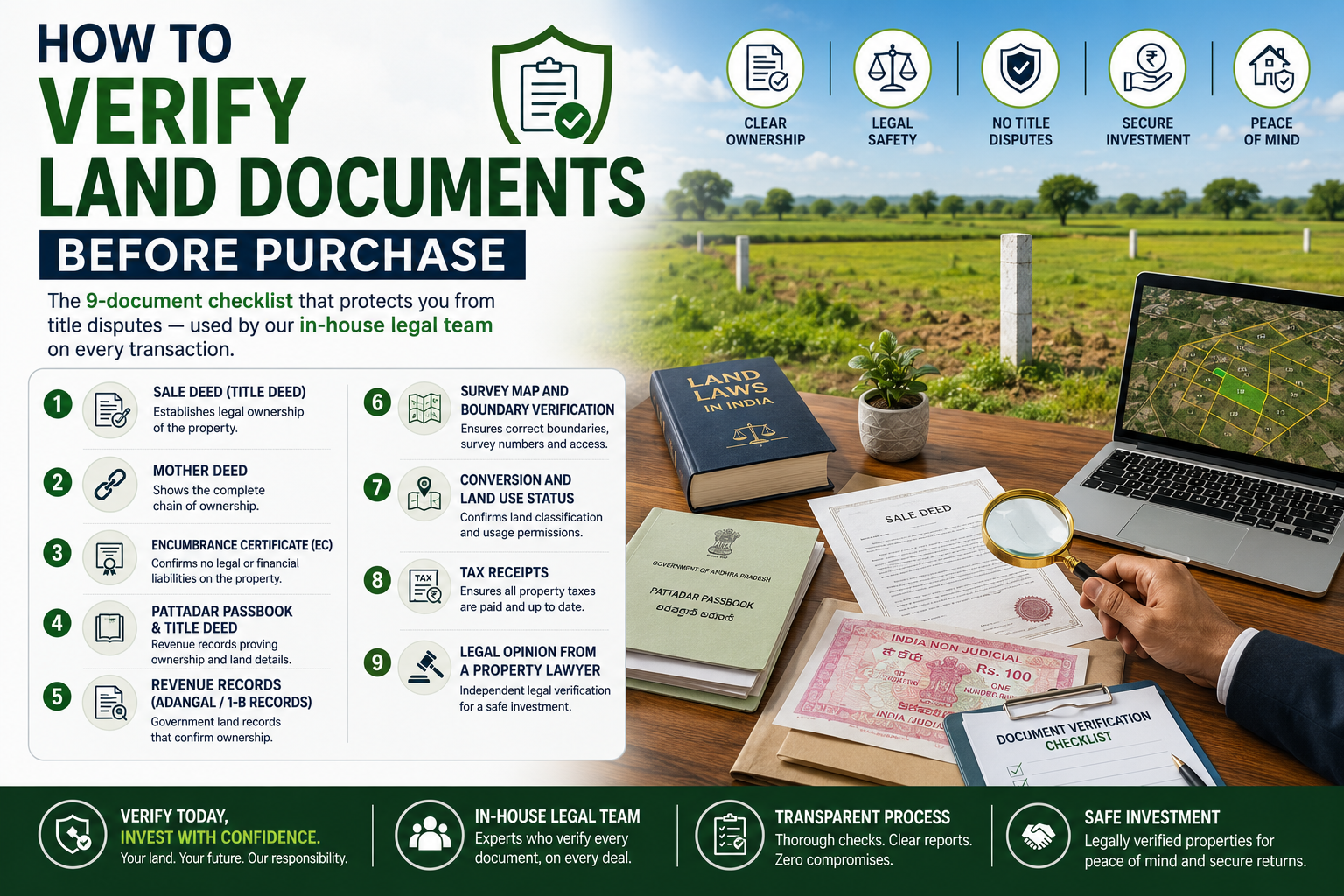
Before paying any advance, carefully verify:
- Registered Sale Deed
- Title history (previous ownership)
- Survey Number and land boundaries
- Pattadar Passbook
- 1B Record
- Adangal
- Encumbrance Certificate (EC)
- Whether the land is free from court cases or government restrictions
It is also advisable to have a qualified property lawyer verify the title before proceeding.
Step 2: Obtain an Encumbrance Certificate (EC)
The Encumbrance Certificate (EC) confirms whether the land has any existing mortgage, loan, legal claim, or registered transaction.
Checking the EC before purchasing agricultural land helps ensure that the property has a clear title.
Step 3: Execute the Sale Agreement
Once the documents are verified:
- Buyer and seller agree on the sale price.
- A Sale Agreement is prepared.
- Advance payment is made.
- Both parties sign the agreement.
This document records the terms of the transaction before final registration.
Step 4: Register the Sale Deed at the Sub-Registrar Office
The final sale deed must be registered at the jurisdictional Sub-Registrar Office (SRO).
Both buyer and seller generally appear with:
- Aadhaar Card
- PAN Card (if applicable)
- Passport-size photographs
- Original land documents
- Two witnesses
- Payment receipts for stamp duty and registration charges
After biometric verification and document validation, the Sale Deed is officially registered.
Step 5: Apply for Patta Transfer (Mutation)
Registration alone is not the final step.
After registration, the ownership details must be updated in the Revenue Department through the mutation (patta transfer) process. Mutation updates the government land records so the new owner’s name appears in the Record of Rights (RoR). Without mutation, revenue records may continue to show the previous owner’s name, which can create complications during future sales or while applying for agricultural loans.
Step 6: Revenue Verification
Revenue officials verify:
- Registered Sale Deed
- Survey details
- Property boundaries
- Ownership records
If everything is in order, the mutation application is approved and updated in the state’s land records system.
Step 7: Download Updated Land Records
Once mutation is completed, verify that the ownership has been updated by checking the relevant Andhra Pradesh land records portal.
Ensure that:
- Pattadar name is correct
- Survey Number matches
- Extent of land is accurate
- Pattadar Passbook reflects the updated ownership
Keeping both digital and physical copies of all documents is recommended for future transactions.
Documents Required
- Registered Sale Deed
- Aadhaar Card
- PAN Card (where applicable)
- Passport-size photographs
- Pattadar Passbook
- 1B Record
- Adangal
- Encumbrance Certificate
- Address Proof
- Passport-size photographs of buyer and seller

Leave a Reply